
Ophélie | February 6, 2023
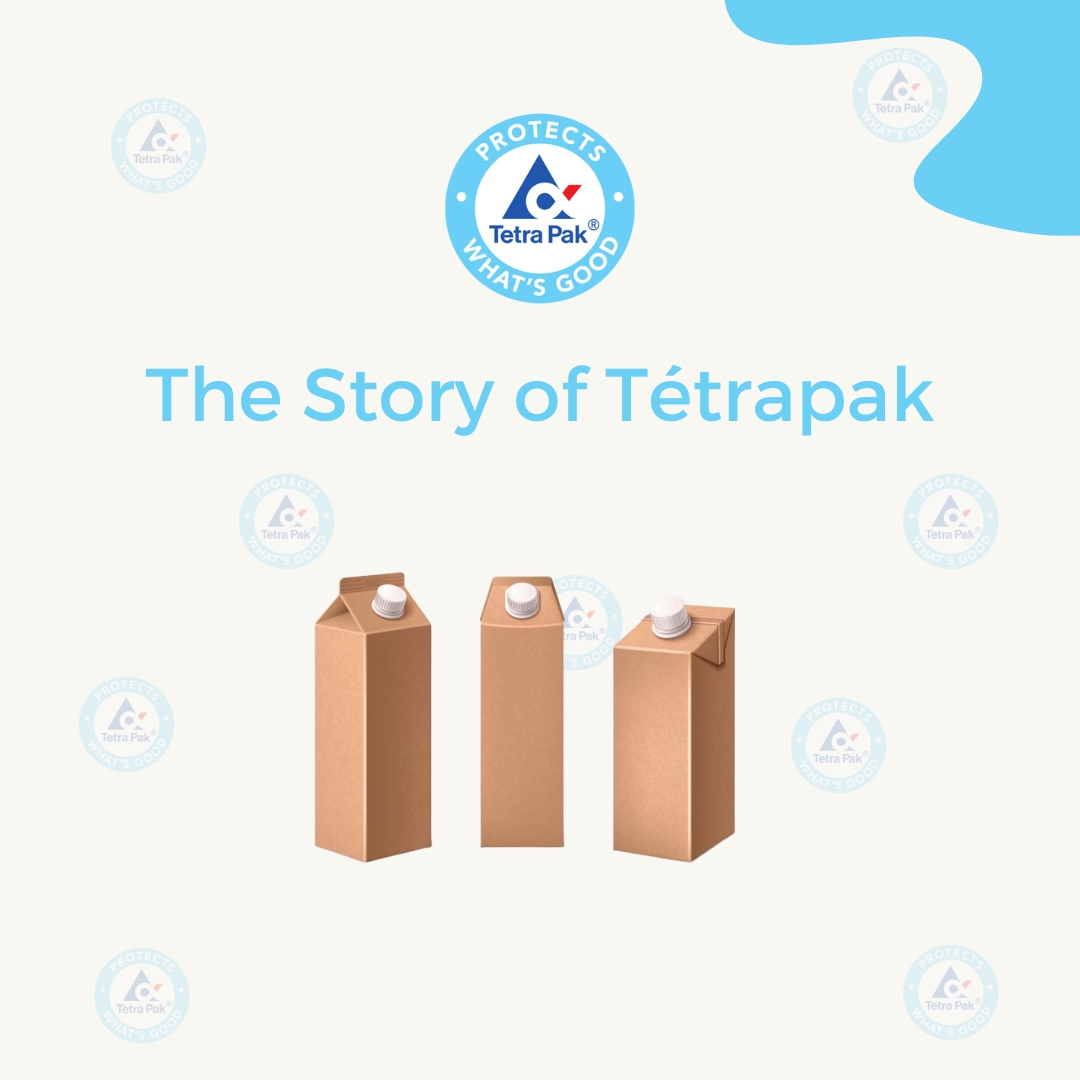
The story of Tetrapak
The story of Tetrapak
Tetra Pak is a type of packaging made from a combination of paper, aluminum, and plastic, designed to preserve and protect food and beverages. Developed in the 1950s as a lightweight and practical alternative to glass bottles and metal cans, it quickly gained popularity for its ability to extend product freshness.
The story of Tetra Pak is one of innovation and problem-solving, as it provided an efficient and sustainable packaging solution. Today, Tetra Pak is used for a wide range of products, from juices and milk to soups and sauces, and remains a preferred choice for consumers worldwide.
Timeline
- 1944 - Swedish engineer Erik Wallenberg first proposes the concept of Tetra Pak.
- 1952 - Tetra Pak, the company founded by Wallenberg, develops and tests the first prototype.
- 1963 - The first commercial Tetra Pak is launched, enabling the preservation of liquid foods such as milk and juice.
- 1980 - The packaging becomes widely used and gains popularity worldwide.
- 1990s - Tetra Pak introduces new materials and technologies to make packaging even more sustainable and environmentally friendly.
- 2000s - Tetra Pak becomes widely adopted for various products, including soups, sauces, and other liquid foods.
- Today - Tetra Pak remains one of the world’s leading sustainable packaging companies, with its products used in over 170 countries. The company continues to innovate and develop new packaging solutions to meet changing consumer and environmental needs.
Impact
From an economic perspective, Tetra Pak has proven to be a highly successful product, with the company becoming one of the leading producers of food and beverage packaging. Its lightweight, cost-effective design makes it an attractive alternative to traditional packaging methods, benefiting both manufacturers and consumers.
From an environmental perspective, Tetra Pak has both positive and negative effects. On one hand, it is made from a combination of recyclable materials, making it a more sustainable option compared to some traditional packaging solutions. On the other hand, its production and recycling processes present challenges, particularly due to the difficulty of separating its multiple layers. To address this, Tetra Pak has invested in more sustainable materials and recycling programs.
Sustainability is a key aspect of Tetra Pak, as it is designed to minimize resource consumption and reduce environmental impact. Its lightweight and flexible design makes it an efficient choice for both consumers and manufacturers. Additionally, the company continues to invest in research and development to improve the sustainability of its products, including using renewable energy sources in its production processes.
In summary, Tetra Pak has had a significant economic, environmental, and sustainability impact and remains a major player in the sustainable packaging industry.
Interesting Facts
- The name "Tetra" comes from the original tetrahedral shape of the packaging (a triangular pyramid).
- The first commercial Tetra Pak package, introduced in 1963, contained juice.
- Currently, only 25% of the plastic materials in Tetra Pak packaging are recycled.
At Nowa Market
While Tetra Pak is an innovative and useful invention, at Nowa Market, we strive to limit its use as much as possible. However, it remains essential for certain products, such as plant-based milk. As long as no alternative ensures the same product quality and preservation, we will continue to offer Tetra Pak packaging while actively seeking more sustainable solutions.